


Hotel app development usually takes 10 to 28 weeks, depending on the size of the platform, number of panels, booking features, hotel API integrations, payment gateways, mobile apps, admin controls, and testing requirements.
A simple hotel booking app MVP can be developed in around 10 to 14 weeks.
A full-featured hotel booking app with Android, iOS, web panel, admin dashboard, hotel supplier APIs, booking engine, wallet, cancellation flow, and reporting can take 20 to 28 weeks or more.
For enterprise-level hotel booking platforms, B2B hotel portals, OTA hotel platforms, or multi-supplier booking systems, the development time can go beyond 6 to 9 months, especially when custom business logic and multiple integrations are involved.
This is why understanding the hotel app development timeline is important before starting the project.
If you are planning to build a hotel app for your travel business, OTA, startup, DMC, hotel chain, or B2B travel agency network, you need to know what takes time, where delays usually happen, and how to plan your launch properly.
This guide explains the complete hotel app development time, stage-by-stage timeline, MVP timeline, advanced platform timeline, API integration timeline, testing duration, and how Silvi Global Technology helps businesses launch scalable hotel booking platforms faster.
What Is the Average Hotel App Development Time?
The average hotel app development time depends on the type of product you want to build.
A hotel app is not just a search and booking screen.
It usually includes real-time hotel search, room availability, price display, booking confirmation, cancellation rules, supplier API integration, payment gateway, customer login, booking history, admin panel, hotel management panel, and sometimes agent or corporate booking features.
Here is a general timeline estimate:
| Type of Hotel App | Estimated Development Time |
| Basic hotel listing app | 6 to 10 weeks |
| Hotel booking app MVP | 10 to 14 weeks |
| Standard hotel booking app | 14 to 20 weeks |
| Advanced hotel booking app | 20 to 28 weeks |
| B2B hotel booking portal | 20 to 32 weeks |
| OTA hotel booking platform | 24 to 36 weeks |
| Multi-supplier hotel platform | 28 to 40+ weeks |
| Enterprise hotel reservation system | 6 to 12 months |
These timelines can change based on design quality, tech stack, API readiness, number of user panels, booking logic, approval speed, testing cycles, and post-launch customization.
If you are still at the planning stage, you can also read our detailed Hotel App Development Guide to understand the complete product structure before finalizing the timeline.
Hotel App Development Timeline by Project Type
Different hotel app ideas need different development timelines.
A startup MVP and a large OTA platform cannot follow the same development schedule.
Let’s understand this in more detail.
1. Basic Hotel Listing App Timeline
A basic hotel listing app takes around 6 to 10 weeks.
This type of app is useful when you want to show hotel details, images, amenities, locations, room categories, and inquiry forms.
It may not include real-time booking or live inventory.
Common features include:
- Hotel listings
- Hotel detail pages
- Image gallery
- Location and map
- Amenities
- Inquiry form
- Basic admin panel
- Contact or callback request
This is usually not a complete hotel booking app.
It works better for small hotel groups, local hotel directories, villa listing businesses, or early-stage validation.
2. Hotel Booking App MVP Timeline
A hotel booking app MVP takes around 10 to 14 weeks.
This is the best starting point for startups that want to launch quickly, test the idea, and improve the product after getting real users.
An MVP usually includes:
- User registration
- Hotel search
- Hotel details
- Room selection
- Date selection
- Guest details
- Basic booking flow
- Payment gateway
- Booking confirmation
- Booking history
- Admin dashboard
- Basic cancellation handling
The MVP may use one hotel supplier API or a limited manual inventory system.
If you want to understand the investment side, we have also covered the complete Hotel App Development Cost breakdown for startups and travel companies.
3. Standard Hotel Booking App Timeline
A standard hotel booking app takes around 14 to 20 weeks.
This includes more polished design, stronger booking flow, user management, payment handling, hotel content management, coupon codes, and better admin controls.
A standard hotel app may include:
- Android app
- iOS app
- Website or web app
- Admin panel
- Hotel search and filters
- Room availability
- Booking confirmation
- Payment gateway integration
- Cancellation policy
- Refund request flow
- Email and SMS notifications
- User wallet or credits
- Offers and discounts
- Basic reports
This type of app is suitable for travel agencies, hotel aggregators, regional OTAs, and businesses that want to compete professionally in the hotel booking market.
4. Advanced Hotel Booking App Timeline
An advanced hotel booking app takes around 20 to 28 weeks.
This timeline is common when the platform includes multiple APIs, dynamic pricing, supplier markup, multiple user roles, loyalty programs, advanced filters, and strong admin controls.
Advanced hotel apps may include:
- Multi-supplier hotel API integration
- Hotelbeds API
- TBO Hotel API
- Expedia Rapid API
- Custom hotel inventory
- Dynamic markup
- Agent login
- Corporate booking
- Wallet system
- Cancellation automation
- Refund tracking
- Promo engine
- Advanced analytics
- Multi-currency support
- Multi-language support
- Review and rating system
This is where development becomes more complex.
The booking logic has to be stable because hotel pricing, cancellation rules, availability, and room combinations can change frequently.
For companies planning a serious travel product, Silvi Global Technology provides complete hotel booking platform development services with custom hotel booking engines, APIs, admin panels, and scalable architecture.
5. B2B Hotel Booking Portal Timeline
A B2B hotel booking portal usually takes 20 to 32 weeks.
This type of platform is used by travel agents, sub-agents, DMCs, tour operators, and corporate travel partners.
A B2B hotel portal is more complex than a normal B2C hotel app because it includes credit limit, agent markup, booking approval, commission, wallet, offline requests, and sub-agent management.
Common modules include:
- Agent registration
- Agent approval
- Sub-agent management
- Credit limit
- Wallet
- Commission rules
- Markup management
- Supplier-wise pricing
- Hotel search
- Voucher generation
- Booking reports
- Invoice management
- Cancellation request
- Admin approval flow
If your business sells hotels through travel agents, the B2B model can be more profitable than only targeting direct customers.
However, it also needs more careful planning.
6. OTA Hotel Booking Platform Timeline
An OTA hotel booking platform can take 24 to 36 weeks or more.
OTA platforms need a stronger backend because they serve multiple customers, agents, suppliers, destinations, and booking flows at the same time.
A complete OTA hotel platform may include:
- B2C hotel booking
- B2B agent booking
- Admin panel
- Supplier integration
- Hotel content management
- Payment gateway
- Booking engine
- Markup engine
- Coupon engine
- Refund system
- Invoice system
- Multi-currency
- Multi-language
- Analytics dashboard
- CRM integration
- Mobile apps
This is not just app development.
It is complete travel technology product development.
If you are planning to launch an OTA, you can also explore our Travel Portal Development Company service page to understand how OTA systems are structured.
Complete Hotel App Development Timeline by Stage
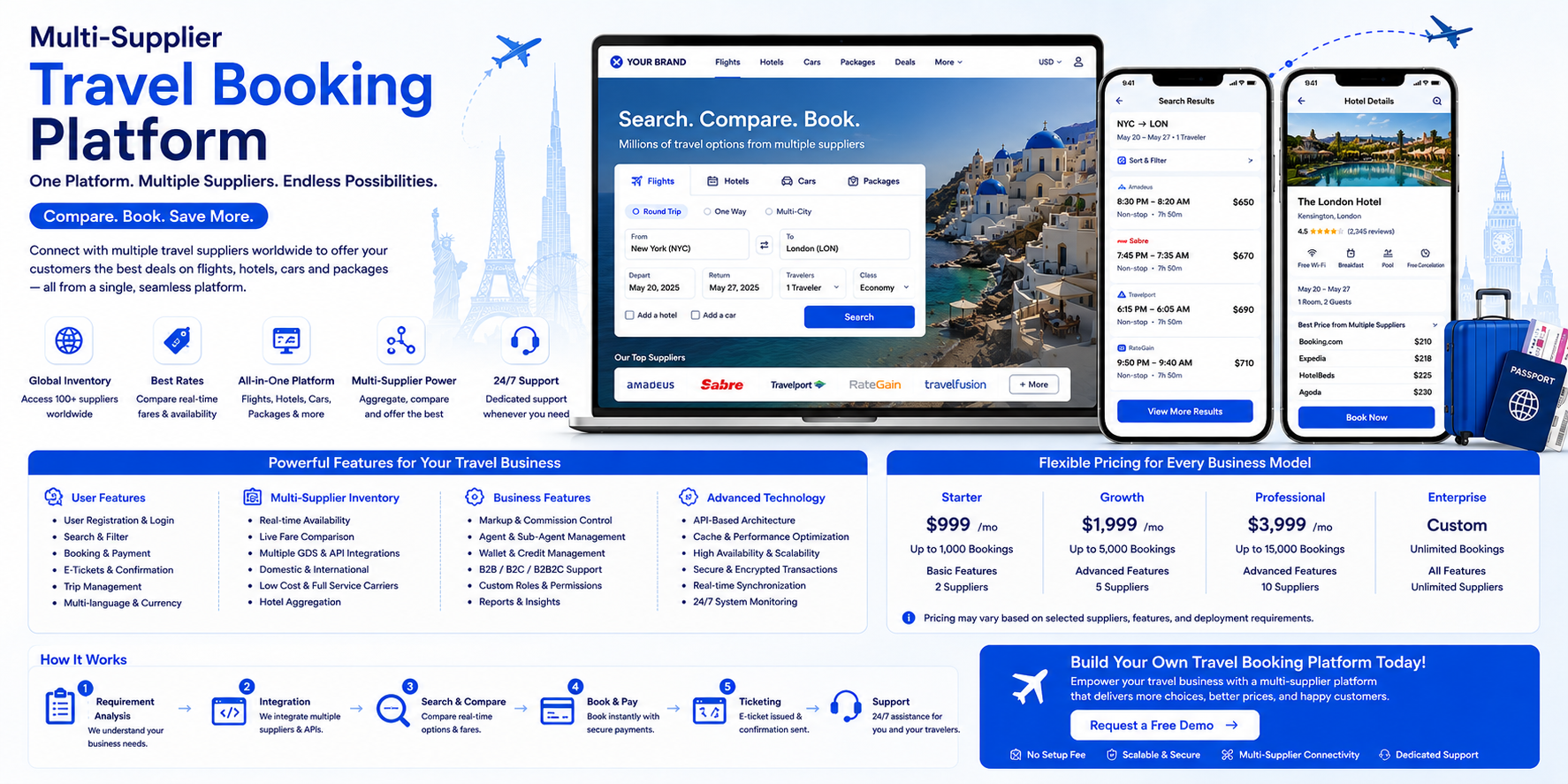
Now let’s break down the hotel app development process stage by stage.
This will help you understand where the time goes.
Stage 1: Requirement Analysis and Planning
Estimated time: 1 to 2 weeks
This is the first and most important stage.
Before writing code, the development team needs to understand what type of hotel app you want to build.
A hotel app can be built for many business models.
For example:
- Hotel booking startup
- Travel agency
- OTA platform
- Hotel chain
- B2B travel agent network
- DMC
- Corporate travel company
- Destination-based hotel marketplace
- White label hotel booking platform
During requirement analysis, the team defines:
- Target users
- Business model
- Booking flow
- Revenue model
- User panels
- Hotel inventory source
- API requirements
- Payment gateway
- Admin controls
- Launch region
- Currency and language needs
- MVP and future roadmap
This stage saves a lot of time later.
Many hotel app projects get delayed because the scope is unclear in the beginning.
A clear requirement document helps the design, development, testing, and launch teams work faster.
Stage 2: Feature Finalization and Scope Document
Estimated time: 3 to 7 days
After requirement analysis, the team creates a feature list and scope document.
This document defines what will be included in the first version of the hotel app.
A typical scope document includes:
- User app features
- Hotel search features
- Booking flow
- Admin panel features
- Supplier panel features
- Payment features
- Notification features
- Reports
- API integrations
- Third-party tools
- Exclusions
- Future enhancements
This stage is important because every additional feature affects the hotel app development time.
For example, a simple booking confirmation flow is faster.
But if you need cancellation automation, partial refund, supplier-wise policy mapping, wallet adjustment, and agent approval, it will take more time.
Stage 3: UI/UX Design
Estimated time: 2 to 4 weeks
UI/UX design is one of the most visible stages of hotel app development.
This is where the user journey is planned.
The design team creates screens for:
- Home page
- Search page
- Destination page
- Hotel listing page
- Hotel detail page
- Room selection page
- Guest details page
- Payment page
- Booking confirmation page
- Login and signup
- Booking history
- Profile page
- Offers page
- Admin dashboard
- Agent panel
- Hotel partner panel
A basic MVP may need 25 to 40 screens.
A full hotel booking platform may need 80 to 150+ screens.
Design time depends on:
- Number of user panels
- Number of app screens
- Web and mobile layout
- Branding quality
- Revision cycles
- Custom UI requirements
- Responsiveness
Hotel app design should be simple, fast, and conversion-focused.
Users should be able to search, compare, and book hotels without confusion.
A beautiful app that slows down booking is not useful.
The best hotel apps focus on clarity, trust, speed, and smooth booking flow.
You can also check our blog on the Best Hotel Apps in the Market to understand what leading platforms do well in terms of user experience.
Stage 4: Frontend Development
Estimated time: 3 to 8 weeks
Frontend development turns the approved design into working screens.
This includes mobile app screens, web pages, responsive layouts, search interface, hotel cards, filters, booking steps, user dashboard, and admin views.
Frontend development usually includes:
- Android app frontend
- iOS app frontend
- Web app frontend
- Admin panel frontend
- Agent panel frontend
- Hotel partner panel frontend
The timeline depends on whether you are building:
- Only web app
- Only mobile app
- Android and iOS apps
- Web plus mobile apps
- Multiple dashboard panels
A simple frontend can be completed in 3 to 4 weeks.
A complete frontend with multiple panels can take 6 to 8 weeks.
If you want to reduce time, using cross-platform frameworks like Flutter or React Native can help launch Android and iOS apps faster.
However, for complex OTA systems, frontend speed also depends on backend API readiness.
Stage 5: Backend Development
Estimated time: 5 to 12 weeks
Backend development is the core of the hotel app.
This is where the booking logic, user data, hotel search, pricing, admin rules, supplier mapping, payment flow, and database structure are created.
Backend development includes:
- User management
- Hotel search logic
- Room availability handling
- Booking engine
- Price calculation
- Markup management
- Cancellation rules
- Payment processing
- Voucher generation
- Booking history
- Admin controls
- Reporting
- Notification triggers
- API management
- Security layers
A basic backend can take around 5 to 6 weeks.
An advanced backend can take 10 to 12 weeks or more.
This stage takes time because hotel booking systems need accuracy.
A small pricing or availability error can create operational issues.
For example, if a room is shown as available but the supplier API returns a different status during booking, the system must handle that properly.
Similarly, cancellation rules need to be displayed clearly before payment.
This is why a hotel booking backend should be built with strong validation, error handling, logging, and fallback logic.
Stage 6: Hotel API Integration
Estimated time: 3 to 10 weeks
Hotel API integration is one of the biggest factors that affects hotel app development time.
If your app uses live hotel inventory from suppliers, you need to integrate hotel APIs.
Popular hotel APIs include:
- Hotelbeds API
- TBO Hotel API
- Expedia Rapid API
- RateHawk API
- WebBeds API
- Travco API
- Direct hotel supplier APIs
- Local DMC APIs
API integration includes:
- Hotel search
- Destination mapping
- Hotel content
- Room availability
- Pricing
- Cancellation policy
- Booking
- Voucher generation
- Booking status
- Cancellation request
- Refund status
A single hotel API integration can take 3 to 6 weeks.
Multiple supplier integrations can take 8 to 12+ weeks, depending on documentation quality, API response structure, testing environment, and certification process.
Hotel API integration is more complex than it looks.
Different suppliers may return hotel data in different formats.
For example:
- Hotel names may vary
- Room names may differ
- Images may be missing
- Cancellation policies may be structured differently
- Taxes may be included or excluded
- Rates may change during booking
- Destination mapping may need cleaning
This is why multi-supplier hotel systems need proper data normalization.
If your business wants to build a Hotelbeds-based hotel platform, you can also read our guide on how to develop a Hotelbeds clone.
For businesses working with B2B hotel suppliers and travel inventory platforms, our GoGlobal Travel clone development guide can also help you understand supplier-based hotel booking models.
Stage 7: Booking Engine Development
Estimated time: 4 to 8 weeks
The hotel booking engine is the system that manages search, availability, pricing, booking, confirmation, and cancellation.
It connects users, suppliers, payment gateways, and admin rules.
A hotel booking engine includes:
- Search request
- Supplier response
- Hotel listing
- Room selection
- Price validation
- Guest details
- Payment processing
- Booking request
- Confirmation
- Voucher
- Cancellation handling
- Refund tracking
The booking engine must be fast and accurate.
It should handle real-time price changes, failed bookings, pending confirmations, payment success but booking failure, supplier timeout, and duplicate booking prevention.
This is why booking engine development is one of the most important parts of the timeline.
Silvi Global Technology also offers dedicated booking engine development services for hotels, flights, buses, transfers, tours, and complete OTA platforms.
Stage 8: Admin Panel Development
Estimated time: 3 to 6 weeks
The admin panel controls the hotel app from the business side.
A hotel booking app without a strong admin panel becomes difficult to manage after launch.
The admin panel usually includes:
- User management
- Booking management
- Hotel management
- Supplier management
- Markup settings
- Commission settings
- Payment reports
- Refund management
- Coupon management
- Banner management
- Agent management
- Role-based access
- Booking analytics
- Invoice management
- Support tickets
Admin panel development can take 3 to 6 weeks depending on complexity.
For a simple MVP, the admin panel may only include users, bookings, hotels, and payments.
For B2B or OTA platforms, the admin panel becomes more detailed.
It may include agent credit, supplier-wise markup, staff roles, branch management, country-wise currency, and detailed reports.
Stage 9: Payment Gateway Integration
Estimated time: 1 to 3 weeks
Payment gateway integration usually takes 1 to 3 weeks.
The timeline depends on the payment provider, country, documentation, testing process, and business approval.
Common payment gateways include:
- Stripe
- Razorpay
- PayPal
- CCAvenue
- PayU
- Cashfree
- Authorize.net
- Local bank gateways
Payment integration for hotel apps should include:
- Payment capture
- Payment confirmation
- Failed payment handling
- Refund initiation
- Payment logs
- Invoice generation
- Currency support
- Tax handling
- Wallet adjustment if required
In hotel booking apps, payment must be carefully connected with booking confirmation.
One of the most important cases is when payment succeeds but supplier booking fails.
In that situation, the system should either retry, create a pending booking, or initiate refund as per business rules.
This logic adds development and testing time.
Stage 10: Testing and Quality Assurance
Estimated time: 3 to 6 weeks
Testing is extremely important in hotel app development.
A hotel booking app deals with live pricing, real payments, customer bookings, cancellation policies, supplier APIs, and business revenue.
Testing should never be rushed.
QA testing usually covers:
- Functional testing
- API testing
- Booking flow testing
- Payment testing
- Cancellation testing
- Refund testing
- UI testing
- Mobile responsiveness testing
- Admin panel testing
- Security testing
- Performance testing
- Cross-browser testing
- User role testing
Hotel booking testing includes many real-world cases.
For example:
- Search with no results
- Price changed before payment
- Supplier timeout
- Room sold out
- Payment failed
- Payment successful but booking failed
- Cancellation request before deadline
- Cancellation request after deadline
- Multiple guests
- Child age policy
- Special request
- Coupon applied
- Markup applied incorrectly
- Agent wallet insufficient
- Refund pending
A basic hotel app may need 2 to 3 weeks of testing.
A full OTA hotel platform may need 4 to 6 weeks or more.
Stage 11: Deployment and Launch
Estimated time: 1 to 2 weeks
After development and testing, the app is prepared for launch.
Deployment includes:
- Server setup
- Database setup
- Domain configuration
- SSL setup
- API production credentials
- Payment gateway live mode
- App store submission
- Play Store submission
- Admin credentials
- Monitoring setup
- Backup configuration
- Final smoke testing
Android apps usually go live faster.
iOS apps may take more time due to App Store review.
Web apps can be launched quickly if hosting, domain, and production settings are ready.
A smooth launch depends on preparation.
If API credentials, payment gateway approval, app store accounts, and server access are delayed, the launch timeline can extend.
Stage 12: Post-Launch Support and Improvements
Estimated time: 2 to 8 weeks after launch
Hotel app development does not end at launch.
After launch, real users may behave differently from test users.
Post-launch support helps improve the product based on real bookings, feedback, API behavior, and business operations.
Post-launch work may include:
- Bug fixing
- Booking flow improvement
- UI changes
- Admin improvements
- Supplier issue handling
- Speed optimization
- New reports
- Offer management
- SEO improvements
- Conversion optimization
- Additional API integration
For a serious hotel app, you should keep at least 2 to 8 weeks for post-launch stabilization.
This is especially important if you are launching with live hotel inventory and payment gateway.
Hotel App Development Time Based on Features
The more features you add, the more time the project needs.
Here is a feature-wise estimate.
| Feature/Module | Estimated Time |
| User login and profile | 1 week |
| Hotel search | 2 to 4 weeks |
| Hotel listing and filters | 1 to 2 weeks |
| Hotel detail page | 1 to 2 weeks |
| Room selection | 1 to 2 weeks |
| Booking flow | 2 to 4 weeks |
| Payment gateway | 1 to 3 weeks |
| Booking history | 1 week |
| Cancellation flow | 2 to 4 weeks |
| Admin panel | 3 to 6 weeks |
| Hotel partner panel | 3 to 5 weeks |
| Agent panel | 4 to 6 weeks |
| Wallet system | 2 to 4 weeks |
| Coupon system | 1 to 2 weeks |
| Multi-currency | 2 to 4 weeks |
| Multi-language | 2 to 4 weeks |
| Reviews and ratings | 1 to 2 weeks |
| Push notifications | 1 to 2 weeks |
| Analytics dashboard | 2 to 4 weeks |
| Supplier API integration | 3 to 10 weeks |
These timelines may overlap if multiple developers are working together.
For example, frontend, backend, API integration, and admin panel can run in parallel.
This is how experienced travel technology teams reduce the total development time.
Hotel App MVP Development Timeline
A hotel app MVP is the fastest way to enter the market.
The goal of MVP development is not to build every feature.
The goal is to build the most important version that users can actually use.
A hotel app MVP usually takes 10 to 14 weeks.
Suggested MVP Timeline
| Week | Work |
| Week 1 | Requirement analysis and scope |
| Week 2 | Wireframes and user flow |
| Week 3-4 | UI/UX design |
| Week 5-8 | Backend and frontend development |
| Week 7-10 | Hotel API or manual inventory integration |
| Week 9-11 | Payment gateway and booking flow |
| Week 11-12 | Admin panel completion |
| Week 12-13 | Testing and bug fixing |
| Week 14 | Deployment and launch |
MVP Features to Include
A hotel app MVP should include:
- User registration
- Hotel search
- Location search
- Date selection
- Guest selection
- Hotel listings
- Hotel details
- Room selection
- Booking flow
- Payment gateway
- Booking confirmation
- User booking history
- Basic admin panel
- Email notifications
Features to Add Later
You can add these features after launch:
- Loyalty program
- Wallet
- AI recommendations
- Multi-supplier API
- Advanced analytics
- Reviews and ratings
- Agent panel
- Corporate booking
- Dynamic packages
- CRM integration
- Multi-language
- Multi-currency
This approach saves time and reduces initial cost.
It also helps you test the market before investing in a large platform.
If you are still deciding what to build first, our blog on How to Start a Hotel Booking App Business can help you plan the product, business model, and launch roadmap.
Advanced Hotel App Development Timeline
An advanced hotel app takes around 20 to 28 weeks or more.
This is suitable for companies that already have a business model, supplier access, travel agents, or existing customer demand.
Suggested Advanced Timeline
| Phase | Timeline |
| Discovery and planning | 1 to 2 weeks |
| UI/UX design | 3 to 5 weeks |
| Frontend development | 5 to 8 weeks |
| Backend development | 8 to 12 weeks |
| Hotel API integration | 6 to 12 weeks |
| Admin and agent panel | 5 to 8 weeks |
| Payment and wallet | 2 to 4 weeks |
| Reports and analytics | 2 to 4 weeks |
| Testing | 4 to 6 weeks |
| Deployment | 1 to 2 weeks |
Since many tasks run in parallel, the total timeline may be around 5 to 7 months instead of adding every phase separately.
What Factors Affect Hotel App Development Time?
Hotel app development time is affected by many business and technical factors.
Let’s look at the most important ones.
Number of Platforms
Building only a web app is faster than building web, Android, and iOS together.
Approximate timeline impact:
- Web only: faster
- Android only: moderate
- Android and iOS: more time
- Web + Android + iOS: longer timeline
- Web + mobile + admin + agent panel: advanced timeline
Cross-platform development can reduce time.
But complex apps still need proper testing on all devices.
Number of User Panels
A hotel app can include multiple panels.
For example:
- Customer app
- Admin panel
- Hotel partner panel
- Travel agent panel
- Corporate panel
- Supplier panel
- Support staff panel
Each panel adds extra design, development, testing, and role management.
A customer-only hotel app is faster.
A multi-panel hotel booking platform takes more time.
Hotel API Integration
API integration can be simple or complex depending on the supplier.
Some APIs have clean documentation and sandbox access.
Others need more mapping, testing, and support communication.
API timeline depends on:
- Documentation quality
- Sandbox availability
- Production credential approval
- Number of endpoints
- Certification process
- Error handling
- Content mapping
- Room mapping
- Cancellation policy structure
Hotel APIs are one of the most common reasons for timeline extension.
Booking Logic Complexity
A basic booking flow is faster.
A complex booking system takes more time.
Complex booking logic may include:
- Dynamic pricing
- Supplier-wise markup
- Agent commission
- Promo codes
- Wallet payment
- Partial payment
- Refund logic
- Cancellation rules
- Booking approval
- Offline confirmation
- Multiple suppliers
- Duplicate hotel mapping
The more rules you add, the more development and testing time you need.
Design Customization
A template-based design is faster.
A custom UI/UX design takes more time but gives better branding and conversion.
If you want your hotel app to compete with platforms like Booking.com, Agoda, Expedia, or Hotels.com, you need a polished design.
For inspiration, you can read our blog on the Best Hotel App Development Companies and evaluate how experienced teams approach travel product design.
Admin Panel Depth
Many businesses focus only on the customer app.
But the admin panel is equally important.
A strong admin panel takes time because it controls the entire business.
Admin features like markup, supplier control, cancellation management, reports, payment logs, and user roles can increase the timeline.
However, they save a lot of operational time after launch.
Testing Requirements
Hotel app testing is more detailed than normal app testing.
It includes search testing, API testing, payment testing, booking testing, cancellation testing, and refund testing.
If the platform has multiple suppliers and multiple user types, testing takes longer.
Skipping testing may reduce the timeline, but it increases business risk.
App Store and Production Approval
The launch timeline also depends on external approvals.
These may include:
- Google Play approval
- Apple App Store review
- Payment gateway approval
- Hotel API production access
- Supplier certification
- Domain and hosting setup
- Business verification
These are not always controlled by the development team.
So it is better to start approval processes early.
How to Reduce Hotel App Development Time
You can reduce hotel app development time with smart planning.
Here are practical ways to launch faster.
Start With an MVP
Do not build everything in the first version.
Start with the most important features.
Launch the MVP.
Then improve based on real users.
This can reduce the first launch time from 6 months to around 3 months.
Finalize Scope Before Development
Changing features during development increases time.
Finalize the core scope before the design and development stage.
You can still keep a future roadmap for additional features.
Use Ready Travel Technology Modules
Using pre-built hotel booking modules, booking engine components, admin structures, and API integration experience can reduce development time.
Silvi Global Technology works with travel technology systems, hotel booking platforms, booking engines, and supplier integrations.
This helps reduce trial-and-error during development.
Keep API Credentials Ready
Many hotel app projects get delayed because API credentials are not ready.
Before development starts, prepare:
- Supplier API credentials
- Sandbox access
- Production access process
- Payment gateway account
- App store accounts
- Domain access
- Hosting access
- Company documents
- Tax details if needed
This keeps development and testing moving smoothly.
Avoid Too Many Changes During Design
Design revisions are normal.
But unlimited design changes can delay the project.
It is better to approve the design direction early.
Then improve small details during development.
Choose an Experienced Hotel App Development Company
Hotel app development is different from normal app development.
Travel technology platforms need supplier APIs, live availability, booking engines, cancellation handling, payment logic, and admin operations.
Choosing an experienced company can reduce mistakes and speed up delivery.
Silvi Global Technology helps travel companies build hotel booking apps, hotel booking engines, OTA platforms, B2B hotel portals, and custom travel technology products.
Hotel App Development Time and Cost Connection
Time and cost are directly connected.
The longer the development timeline, the higher the development cost.
A basic hotel app may cost around $8,000 to $18,000 and take 10 to 14 weeks.
A standard hotel booking app may cost around $18,000 to $40,000 and take 14 to 20 weeks.
An advanced hotel booking platform may cost around $40,000 to $90,000+ and take 20 to 36 weeks.
An enterprise OTA hotel platform may cost $100,000+ and take 6 to 12 months depending on scope.
Here is a simple comparison:
| App Type | Timeline | Estimated Cost |
| Basic hotel app | 6 to 10 weeks | $5,000 to $12,000 |
| Hotel app MVP | 10 to 14 weeks | $8,000 to $18,000 |
| Standard hotel booking app | 14 to 20 weeks | $18,000 to $40,000 |
| Advanced hotel app | 20 to 28 weeks | $40,000 to $90,000 |
| B2B hotel portal | 20 to 32 weeks | $45,000 to $100,000 |
| OTA hotel platform | 24 to 36+ weeks | $70,000 to $150,000+ |
These are practical estimates.
The final cost depends on features, design, APIs, tech stack, platforms, and development team location.
If you want a deeper cost breakdown, read our complete guide on hotel app development cost.
Hotel App Development Timeline for Startups
For startups, the best timeline is usually 12 to 16 weeks.
This gives enough time to build a useful MVP without overbuilding.
A startup should focus on:
- Fast launch
- Clean booking flow
- One strong supplier API
- Simple payment system
- Basic admin panel
- Good mobile experience
- SEO-ready web pages
- Analytics tracking
- User feedback
Do not spend too much time building every feature before launch.
The first version should prove that users want your product.
Once bookings start, you can add advanced modules.
Hotel App Development Timeline for Travel Agencies
Travel agencies usually need a hotel app or portal that connects to suppliers and supports customer or agent bookings.
The timeline is usually 14 to 24 weeks.
Important features include:
- Hotel search
- Customer booking
- Agent booking
- Markup management
- Payment gateway
- Booking reports
- Voucher generation
- Cancellation request
- Admin control
- Supplier API integration
Travel agencies may also need flight, transfer, visa, insurance, and package modules in the future.
So the hotel app should be built on scalable architecture.
Hotel App Development Timeline for OTAs
OTAs need more time because they need stronger systems.
The timeline is usually 24 to 36 weeks.
OTA platforms need:
- High-performance search
- Multi-supplier hotel data
- Customer app
- Web booking
- Admin panel
- Marketing CMS
- Offers
- SEO pages
- Payment system
- Booking management
- Reports
- CRM integration
- Multi-currency
- Multi-language
- Support panel
If your goal is to build a platform like Agoda, you can read our guide on the cost to develop an app like Agoda to understand the complexity of large hotel booking platforms.
Suggested Hotel App Development Roadmap
Here is a practical roadmap for building and launching a hotel app.
Phase 1: MVP Launch
Timeline: 10 to 14 weeks
Build the first usable version.
Include hotel search, booking, payment, confirmation, user profile, and admin panel.
Phase 2: Business Features
Timeline: 6 to 10 weeks after MVP
Add business features like coupons, wallet, markup, reports, cancellation improvements, and supplier controls.
Phase 3: Growth Features
Timeline: 8 to 12 weeks
Add reviews, loyalty, personalization, mobile notifications, referral system, and SEO landing pages.
Phase 4: Scale Features
Timeline: 12+ weeks
Add multi-supplier inventory, B2B agent portal, corporate panel, AI recommendations, dynamic packaging, and advanced analytics.
This phased approach helps you launch faster and scale better.
Common Reasons Hotel App Projects Get Delayed
Hotel app projects usually get delayed because of unclear scope, slow approvals, API issues, and repeated changes.
Here are the most common reasons:
- Features are not finalized
- Design approvals take too long
- API credentials are delayed
- Supplier documentation is incomplete
- Payment gateway approval is pending
- New features are added mid-development
- Testing feedback is delayed
- App store accounts are not ready
- Business rules keep changing
- Admin requirements are unclear
- Cancellation and refund logic is not defined
The best way to avoid delays is to plan the project properly before development starts.
What Silvi Global Technology Needs to Start Hotel App Development
To start hotel app development smoothly, Silvi Global Technology usually needs:
- Business model details
- Feature list
- Target country or market
- Preferred platforms
- Branding details
- Hotel supplier details
- API credentials if available
- Payment gateway preference
- Domain and hosting preference
- Admin roles
- Booking rules
- Cancellation rules
- Currency requirements
- Language requirements
- Launch timeline
If you do not have all the details ready, our team can help you create a product roadmap first.
Why Choose Silvi Global Technology for Hotel App Development?
Silvi Global Technology is a travel technology development company that builds hotel booking apps, hotel booking platforms, booking engines, OTA portals, B2B travel portals, supplier integrations, and custom travel software.
We understand that hotel app development is not just about building screens.
It is about building a reliable booking system that handles real users, real inventory, real payments, and real business operations.
Our hotel app development services include:
- Custom hotel app development
- Hotel booking platform development
- Hotel booking engine development
- B2B hotel portal development
- OTA hotel platform development
- Hotel API integration
- Admin panel development
- Agent panel development
- White label hotel platform setup
- Payment gateway integration
- Post-launch support
Whether you want to build a simple hotel booking MVP or a complete hotel OTA platform, Silvi Global Technology can help you plan the right timeline, cost, architecture, and launch roadmap.
FAQs About Hotel App Development Time
How long does it take to develop a hotel app?
Hotel app development usually takes 10 to 28 weeks. A basic MVP can take 10 to 14 weeks, while a full-featured hotel booking app can take 20 to 28 weeks. Large OTA or B2B hotel platforms may take 6 to 12 months.
Can a hotel booking app be developed in 3 months?
Yes, a hotel booking app MVP can be developed in around 3 months if the scope is clear. It should include essential features like hotel search, booking, payment, confirmation, user account, and admin panel. Advanced features can be added later.
What takes the most time in hotel app development?
Hotel API integration, booking engine development, admin panel development, cancellation logic, payment handling, and testing usually take the most time. Multi-supplier integration can also increase the timeline because hotel data needs mapping and validation.
How long does hotel API integration take?
A single hotel API integration can take 3 to 6 weeks. Multiple hotel supplier integrations can take 8 to 12 weeks or more depending on API documentation, sandbox access, endpoints, certification, and testing requirements.
How long does it take to build a hotel booking engine?
A hotel booking engine usually takes 4 to 8 weeks to develop. The timeline depends on search logic, room availability, pricing validation, booking confirmation, cancellation rules, payment handling, and supplier API integration.
How long does it take to build a B2B hotel booking portal?
A B2B hotel booking portal usually takes 20 to 32 weeks. It takes longer than a normal hotel app because it includes agent management, wallet, credit limit, commission, markup, invoice, booking reports, and admin approval flows.
How long does it take to build an OTA hotel platform?
An OTA hotel platform usually takes 24 to 36 weeks or more. If the platform includes B2C, B2B, mobile apps, multi-supplier hotel APIs, CRM, payment, multi-currency, and advanced reporting, it may take 6 to 12 months.
Can hotel app development time be reduced?
Yes, hotel app development time can be reduced by starting with an MVP, finalizing the scope early, using experienced travel technology developers, preparing API credentials in advance, and avoiding too many changes during development.
Does adding mobile apps increase the timeline?
Yes, adding Android and iOS apps increases the timeline. However, cross-platform development using Flutter or React Native can reduce time compared to building separate native apps. The exact timeline depends on app complexity.
How much does hotel app development cost based on timeline?
A hotel app MVP may cost $8,000 to $18,000 and take 10 to 14 weeks. A standard hotel booking app may cost $18,000 to $40,000 and take 14 to 20 weeks. Advanced platforms may cost $40,000 to $150,000+ depending on scope.
Final Thoughts
Hotel app development time depends on what you want to build.
A simple hotel booking MVP can be launched in around 10 to 14 weeks.
A standard hotel app may take 14 to 20 weeks.
A complete OTA hotel booking platform or B2B hotel portal can take 24 to 36 weeks or more.
The timeline depends on features, APIs, booking engine logic, user panels, admin controls, payment gateway, testing, and launch preparation.
The best approach is to start with a clear roadmap.
Build the first version with essential features.
Launch fast.
Then improve with real user feedback.
Silvi Global Technology helps travel startups, OTAs, travel agencies, hotel aggregators, and B2B travel companies build scalable hotel apps and booking platforms with the right development timeline, cost planning, and technical architecture.